

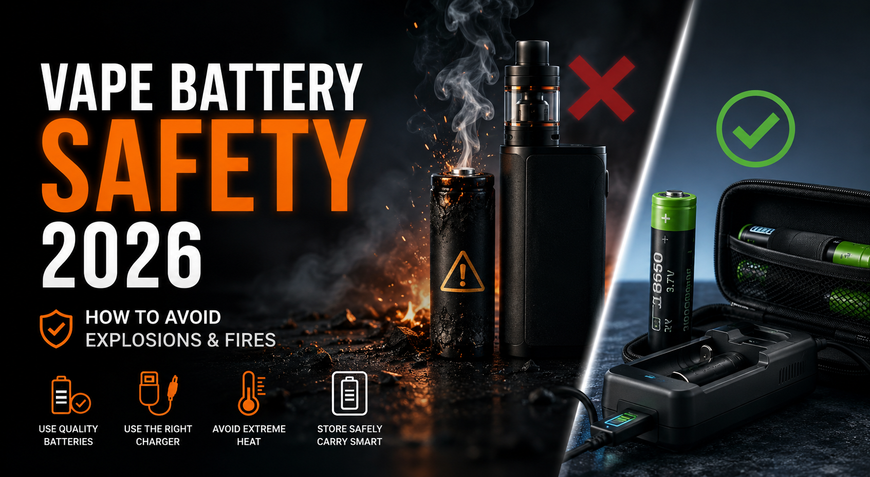
Vape Battery Safety 2026: How to Avoid Explosions & Fires
JOHN Williams on 29th May 2026
Vape technology has evolved rapidly in 2026. Disposable devices now include larger rechargeable batteries, smart chipsets, USB-C fast charging, display screens, and advanced dual-mesh systems. But despite all these improvements, battery safety remains one of the most important topics in vaping.
Most vape accidents are preventable. In many cases, overheating or battery failure happens because users ignore warning signs, use low-quality counterfeit products, or charge devices incorrectly.
This guide explains exactly how vape battery fires happen, what causes explosions, how to safely charge your device, and what every vape user should know in 2026.
⚠️ Biggest Causes of Vape Battery Fires
Why Vape Batteries Become Dangerous
Most modern vape devices use lithium-ion batteries — the same technology used in smartphones, laptops, and electric vehicles. These batteries store a large amount of energy inside a compact space.
When damaged, punctured, overheated, or overcharged, lithium-ion batteries can enter a dangerous process called thermal runaway. This creates rapid internal heat buildup that may cause smoke, fire, or battery failure.
Common Battery Failure Triggers
- Cheap low-quality disposable vapes
- Incorrect chargers or unstable power sources
- Damaged USB-C charging ports
- Physical impact from dropping the device
- Extreme heat exposure
- Using old damaged batteries
- Counterfeit vape products
Warning Signs Your Vape Battery Is Unsafe
? Excessive Heat
If your vape becomes extremely hot while charging or using it, stop immediately and disconnect the device.
⚠️ Swelling or Bulging
A swollen vape body or expanded battery area often indicates internal battery damage.
? Charging Problems
Flickering lights, unstable charging, sparks, or unusual sounds should never be ignored.
? Strange Chemical Smells
Sweet metallic or chemical odors may indicate internal leakage or overheating.
Safe Vape Charging Rules for 2026
Use Original Chargers
Cheap chargers can send unstable voltage and damage internal battery systems.
Never Charge Overnight
Unattended charging increases the risk of unnoticed overheating.
Avoid Beds & Sofas
Always charge your vape on hard surfaces with proper airflow.
Disconnect When Full
Leaving devices plugged in unnecessarily creates additional heat stress.
Final Thoughts
Vape battery safety in 2026 is all about awareness, responsible charging habits, and buying authentic products from trusted sources. While battery failures can happen, the vast majority of incidents are preventable.
Understanding how lithium-ion batteries work — and recognizing early warning signs — can dramatically reduce the risk of overheating, fires, or explosions.
As vape technology continues evolving, battery safety education will remain one of the most important parts of responsible vaping.