

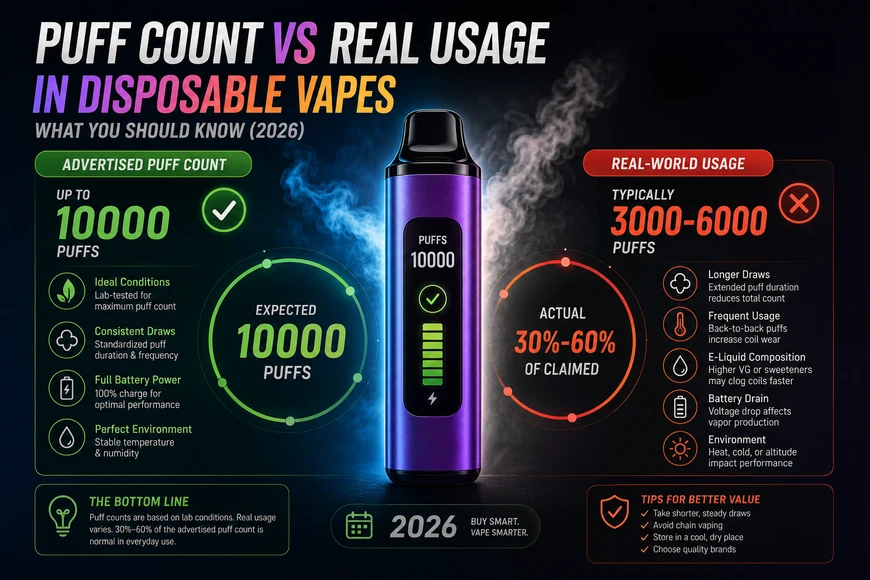
Puff Count vs Real Usage in Disposable Vapes What You Should Know (2026)
JOHN Williams on 8th May 2026
One of the most misunderstood concepts in the disposable vape industry is puff count. In 2026, many devices advertise extremely high puff numbers, but real-world usage often tells a different story.
Understanding the difference between advertised puff count and actual usage is essential for making informed purchasing decisions and avoiding misleading expectations.
What Is Puff Count?
Puff count refers to the estimated number of inhalations a disposable vape device can provide before it runs out of battery or e-liquid.
- Based on lab testing conditions
- Calculated under controlled puff duration
- Varies depending on usage behavior
- Not always reflective of real-world use
Manufacturers often use standardized testing conditions that do not fully reflect real user behavior.
Why Real Usage Is Different
Real-world usage varies significantly due to individual vaping habits, airflow preferences, and puff intensity.
- Longer or deeper inhalations reduce total puff count
- Frequent usage drains battery faster
- High airflow settings increase consumption
- Temperature and coil efficiency also affect output
Battery Life vs E-Liquid Capacity
In disposable vape devices, performance is limited by two main factors: battery life and e-liquid capacity.
If either one runs out first, the device stops functioning—even if the other still has remaining capacity.
This is why rechargeable systems have become more popular in modern devices.
Related: Rechargeable vs Traditional Disposables
Role of Mesh Coil Efficiency
Mesh coil systems improve efficiency by vaporizing e-liquid more evenly, which can impact how long a device lasts in real usage.
Learn more: Mesh Coil Vape Technology Explained
Why High Puff Devices Don’t Always Last Longer
High puff devices are designed for extended use, but actual performance depends on user behavior and device engineering quality.
While advertised puff counts can be high, real-world results may vary based on draw strength and usage frequency.
Related: What Makes High Puff Disposable Vapes So Popular?
Brands Known for Accurate Performance
- Geek Bar – balanced puff consistency
- Flum – stable battery output systems
- ELF BAR – widely tested performance range
- Lost Mary – consistent flavor and usage balance
- Mr Fog – high capacity engineering
- Raz Vape – modern efficiency design
Common Misconceptions About Puff Count
Many users assume that higher puff numbers always mean better value, but this is not always true.
- Higher puff count does not guarantee longer real usage
- Device efficiency matters more than marketing numbers
- Coil and airflow design affect longevity
What Actually Determines Device Longevity
Real device lifespan is influenced by multiple factors beyond puff count.
- Battery capacity and efficiency
- Mesh coil performance
- Airflow design
- Usage style of the user
Why Manufacturers Use Puff Count Marketing
Puff count is used as a marketing metric because it is easy to understand and compare. However, it does not always reflect real-world performance accurately.
This has led to increased awareness among experienced users who now focus more on performance consistency.
Impact on User Behavior
As users become more informed, they are shifting away from relying on puff count alone and focusing more on:
- Flavor consistency
- Battery reliability
- Mesh coil performance
- Real-world usage reviews
Internal Market Shift
The industry is gradually moving toward more transparent performance metrics and smarter device designs that prioritize real usability over theoretical numbers.
Related Articles in This Series
Conclusion
Puff count is a useful reference metric, but it does not fully represent real-world vape performance. Users in 2026 are increasingly focusing on actual experience, device efficiency, and consistency rather than marketing numbers alone.
Understanding this difference helps users make smarter purchasing decisions and avoid unrealistic expectations.