

Is Vaping Safe During Pregnancy? Risks, Research Findings & What Doctors Recommend (2026 Guide)
Sam JR on 21st Apr 2026
What Medical Research Says About Vaping and Pregnancy Safety
Pregnancy is a time when many people begin reviewing everyday habits more carefully, especially those that may affect long-term health outcomes for both mother and baby. One common question that appears frequently in medical discussions and online searches is whether vaping is safer than smoking during pregnancy — or safe at all.
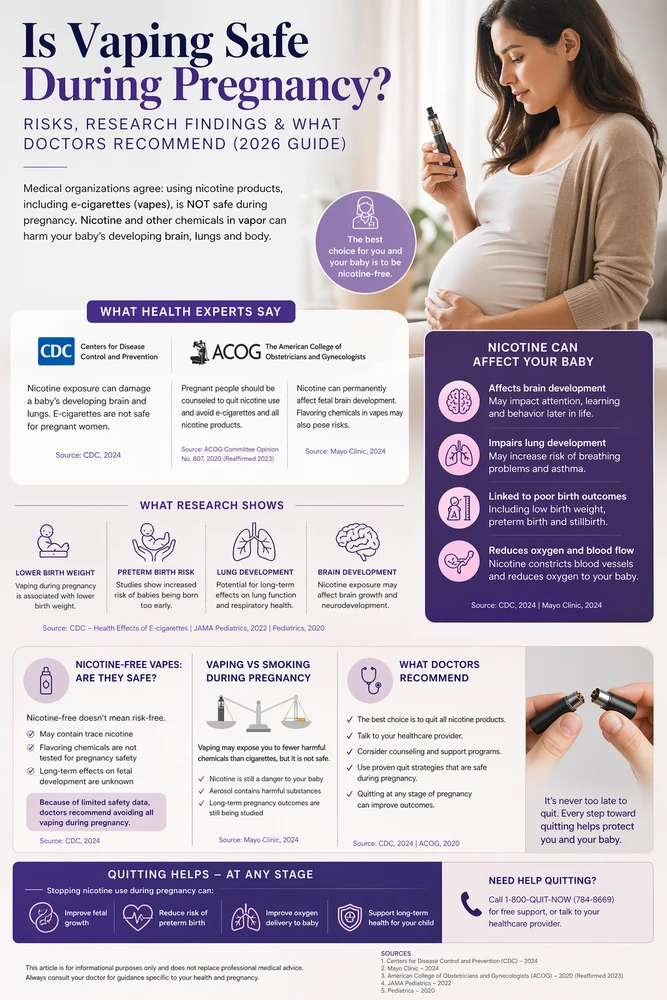
Current medical guidance from public-health organizations is clear: using nicotine products, including vaping devices, is not considered safe during pregnancy. However, understanding why helps expecting parents make informed decisions.
This guide explains what research shows about vaping during pregnancy, how nicotine affects fetal development, what doctors recommend today, and what alternatives may support safer outcomes.
What Health Organizations Say About Vaping During Pregnancy
Major medical organizations agree on one point: avoiding nicotine exposure during pregnancy is strongly recommended.
According to the Centers for Disease Control and Prevention (CDC):
- nicotine exposure can damage a baby’s developing brain and lungs
- e-cigarettes often contain additional chemicals beyond nicotine
- vaping products are not safe for pregnant women
Similarly, the Mayo Clinic reports that nicotine can permanently affect fetal brain development and that flavoring chemicals used in vaping liquids may also pose risks during pregnancy.
Because fetal development continues rapidly throughout pregnancy, even moderate nicotine exposure may influence growth patterns.
Why Nicotine Exposure Matters During Pregnancy
Nicotine affects blood flow, oxygen delivery, and neurological development. During pregnancy, these effects can become more significant because the placenta delivers nutrients directly to the developing baby.
Research shows nicotine exposure may contribute to:
- reduced oxygen supply to the fetus
- slower fetal growth
- increased likelihood of low birth weight
- premature birth risk
- changes in lung development
- changes in brain development affecting attention and learning later in life
Even when vaping contains fewer combustion toxins than cigarettes, nicotine itself remains a primary concern.
Are Nicotine-Free Vapes Safe During Pregnancy?
Some people assume nicotine-free devices remove the risk. However, current research suggests caution is still necessary.
Many vape liquids labeled nicotine-free may still contain:
- trace nicotine residues
- solvents such as propylene glycol
- flavoring compounds not studied for prenatal exposure
The CDC explains that flavoring chemicals used in electronic vapor products may also be harmful to developing babies.
Because pregnancy safety data for these ingredients remains limited, healthcare providers generally recommend avoiding vaping altogether.
Is Vaping Safer Than Smoking During Pregnancy?
This question appears often, especially among adults trying to transition away from cigarettes.
Evidence suggests vaping may expose users to fewer combustion toxins than cigarettes, but that does not make vaping safe during pregnancy.
Medical guidance emphasizes:
- nicotine exposure still affects fetal development
- aerosol particles may contain harmful substances
- long-term pregnancy outcomes related to vaping are still being studied
According to the Mayo Clinic, even though vaping may reduce exposure to some toxins compared with cigarettes, nicotine exposure alone is enough to create concern during pregnancy.
How Vaping Aerosol Can Affect a Developing Baby
Unlike regular air, vaping aerosol contains microscopic particles that enter the bloodstream through the lungs. During pregnancy, these substances may cross the placenta.
Researchers continue studying how aerosol exposure affects:
- fetal oxygen delivery
- placental blood circulation
- neurological signaling development
- immune system responses after birth
The CDC also reports that vaping during pregnancy has been associated with preterm birth and lower birth weight in some cases.
Secondhand Vape Exposure During Pregnancy
Even indirect exposure matters.
Secondhand aerosol may contain:
- nicotine
- ultrafine particles
- heavy metals
- volatile organic compounds
Because pregnancy increases sensitivity to environmental exposure, healthcare professionals recommend minimizing exposure to both cigarette smoke and vape aerosol whenever possible.
Why Some People Consider Vaping During Pregnancy
Some adults who previously smoked cigarettes consider switching to vaping during pregnancy because they believe it may reduce harm.
Common reasons include:
- attempting to reduce nicotine intake gradually
- replacing cigarettes with a non-combustible option
- misunderstanding nicotine content in devices
- assuming flavored vapor products are safer
However, public-health guidance consistently recommends discussing cessation strategies directly with a healthcare provider instead.
What Doctors Recommend Instead of Vaping During Pregnancy
Healthcare providers typically recommend:
- behavioral counseling programs
- quit-support phone services
- physician-approved cessation strategies
- supervised nicotine-replacement therapy when appropriate
The CDC explains that counseling and structured quit-support programs are among the most effective tools available during pregnancy.
Can Quitting Vaping Later in Pregnancy Still Help?
Yes.
Stopping nicotine exposure at any point during pregnancy can improve health outcomes.
The CDC confirms quitting tobacco products during pregnancy may:
- improve fetal growth
- reduce premature birth risk
- improve oxygen delivery to the baby
Earlier cessation provides the greatest benefit, but later changes still matter.
How Device Type Can Influence Exposure Awareness
Modern devices vary widely in nicotine delivery strength, airflow structure, and usage behavior. Because of this variation, many people researching product structure and usage differences explore educational resources available through trusted vape shops before selecting devices or reviewing safety information during pregnancy planning.
Understanding how devices differ helps clarify why nicotine exposure levels can vary significantly between platforms.
Why Ingredient Transparency Matters During Pregnancy Research
Expecting parents often begin reviewing ingredient labels more closely when evaluating vapor products. Learning how nicotine concentration, coil temperature behavior, and flavor formulation differ across modern disposable vapes helps explain why medical organizations recommend avoiding exposure during pregnancy whenever possible.
This type of research supports safer decision-making and improves awareness of how device design affects aerosol output.
Frequently Asked Questions About Vaping During Pregnancy
Can vaping cause birth defects?
Research suggests nicotine exposure during pregnancy may increase the risk of developmental complications affecting lungs, brain growth, and birth weight.
Is occasional vaping during pregnancy safe?
There is currently no confirmed safe level of nicotine exposure during pregnancy. Medical organizations recommend avoiding all nicotine products.
Are flavored vapes safer during pregnancy?
Flavoring compounds used in vapor liquids are not approved for prenatal inhalation safety and may still affect fetal development.
Can quitting vaping improve pregnancy outcomes?
Yes. Stopping nicotine exposure at any stage of pregnancy can improve oxygen delivery and support healthier fetal growth.
Should someone switch from cigarettes to vaping during pregnancy?
Healthcare providers typically recommend quitting nicotine completely rather than switching products. Support programs and counseling are preferred strategies.
Sources
This article is based on guidance from:
- Centers for Disease Control and Prevention (CDC)
- Mayo Clinic pregnancy health guidance
- American College of Obstetricians and Gynecologists (ACOG)
- Maternal-infant health research summaries
Key references:
CDC — E-Cigarettes and Pregnancy
CDC — Health Effects of Vaping
CDC — Smoking and Pregnancy Outcomes
Mayo Clinic — Vaping During Pregnancy